Labels

Showing posts with label Andhra Pradesh State. Show all posts

Monday, November 11, 2013

Train Ride in India, Secunderabad to Guntur, 2011

The ride: 24th June 2011

During 2 years of my working stay in India, I always wanted to venture train rides in India. When a short working assignment was given to me in June 2011, a month after my arrival on working visa passport, I was truly overjoyed to ride a smaller parts out of 115,000 km length of railway line built all over India. It was a short journey to reach a project site in Vijayawada from our headquarters in Hyderabad. The distance between 2 populated cities is approximately 275 km.


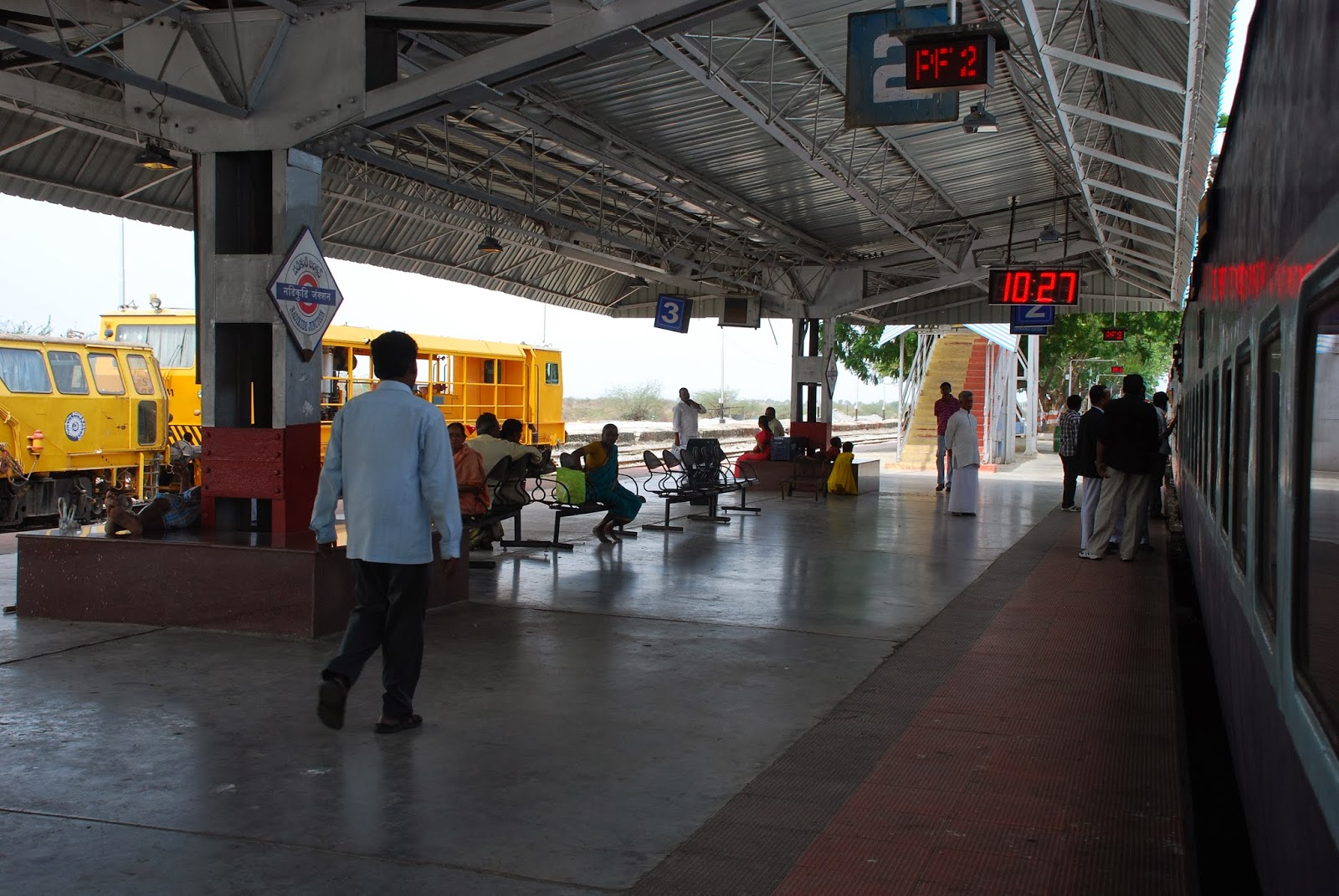
With the train ticket in my hand and a camera safe in my bag pack, I was so ready to experience the adventurous journey as soon as I reached the Secunderabad Railway Station, seen in below photo. An evening before, I was telling everyone in the office the details that I'm going to capture during the ride. The secretary purchased a seat ticket at air-conditioned class 2 carrier. The journey will takes about 2 - 3 hours only. 


My face started to frown when the smell (not the scenery) was not what I expected. The shits like smell hits my nose when we entered the platform. I was wondering what was that? where it was coming from? I hold my nostrils as not to keep my spirits down. When I was about to step into the carrier, I looked down onto the tracks beneath. It was a fresh shits, strongly smells, visible right down on the track. Only Heaven knows how shocked I was. Nobody forewarned me what to expect there, at the station. How did Shahrukh Khan able to sing and dance as if he was enjoying a fresh weather smells in his film?? 


Once inside the carrier, I dare not move anywhere due to the shock that I just encountered. Later I was told that it was too expensive for the Indian Railway to put up a toilet facilities in all the stations, though efforts has been made since 2002 for a clean trains. Hence, man and woman will take turn to do their business, "there" at the edge of the track border. Railways were first introduced in India in 1853 from Bombay to Thane. It takes time for the Indian Railways to upgrade the train facilities as what we have in Malaysia. In fact, when I was travelling from Butterworth to Bangkok I saw the same thing (i.e. toilets on the tracks". Both Malaysia and Thailand are upgrading their railway system at present with the hope that 1 day, all the train will have proper toilet sucking system like most of in urban area.


Back to my mission of capturing the beautiful rural view scenery with my camera. The window panel of the class 2 air-conditioned is a bullet proof. It was another disappointment as the result of my photo from inside the train is like the above photo. On the positive note, I like the reading culture in India. Most of the locals reads a lot. How impressive. I had my opportunity to have few shots at one of the small station when the train stops to let passengers get in and get off. 


At the same stop, I saw how the passengers break the rule by simply crossing the track to the other sides of the rail line. This dangerous act is recorded in below photo.


Guntur train station, written in local Telegu was captured in below photo.


On 27th June 2011, we returned to Hyderabad via night train, again from Guntur station. The night view at the train station was something that I looked forward. A lot of them are simply sleeping on the floor with and without a mat. It was a bliss to see how peaceful they are in their deep sleep ignoring the loud sounds of locomotive bells. 


This is how the sleeping berth of class 2 air-conditioned looks like. It was not bad for a good night sleep though mine was disturbed all the way till we safely reached Hyderabad the next morning. Sadly that I do not had anymore opportunity nor the courage, except for a short 100 km distance ride from Pune to Daund in August that year during another assignment in Maharashtra state.


Friday, October 4, 2013

Work by Kahlil Gibran

Kahlil Gibran speaks about "Works" in the Prophet

Fierce at works, being alone (Malaysian) at site surrounded by locals in Vijayawada, India, 2012

You work that you may keep pace with the earth and the soul of the earth.
For to be idle is to become a stranger unto the seasons,
and to step out of life's procession, that marches in majesty and proud submission towards the infinite.

When you work you are a flute through whose heart the whispering of the hours turns to music.
Which of you would be a reed, dumb and silent, when all else sings together in unison?

Work inspection by the Employer/IE


Always you have been told that work is a curse and labour a misfortune.
But I say to you that when you work you fulfil a part of earth's furthest dream, assigned to you when that dream was born,
And in keeping yourself with labour you are in truth loving life,
And to love life through labour is to be intimate with life's inmost secret.

Laying DBM on new road lane

But if you in your pain call birth an affliction and the support of the flesh a curse written upon your brow, then I answer that naught but the sweat of your brow shall wash away that which is written.

You have been told also that life is darkness, and in your weariness you echo what was said by the weary.
And I say that life is indeed darkness save when there is urge,
And all urge is blind save when there is knowledge,
And all knowledge is vain save when there is work,
And all work is empty save when there is love;
And when you work with love you bind yourself to yourself, and to one another, and to God.

Obstruction for not willing to gave-up their land for the service roads

And what is it to work with love?
It is to weave the cloth with threads drawn from your heart,
even as if your beloved were to wear that cloth.
It is to build a house with affection,
even as if your beloved were to dwell in that house.
It is to sow seeds with tenderness and reap the harvest with joy,
even as if your beloved were to eat the fruit.
It is to charge all things you fashion with a breath of your own spirit,
And to know that all the blessed dead
are standing about you and watching.

Blocking the excavator from clearing the land acquired by the Government

Often have I heard you say, as if speaking in sleep, "He who works in marble, and finds the shape of his own soul in the stone, is nobler than he who ploughs the soil.
And he who seizes the rainbow to lay it on a cloth in the likeness of man, is more than he who makes the sandals for our feet."
But I say, not in sleep but in the overwakefulness of noontide, that the wind speaks not more sweetly to the giant oaks than to the least of all the blades of grass;
And he alone is great who turns the voice of the wind into a song made sweeter by his own loving.

Load Test for Vijayawada Flyover

Work is love made visible.
And if you cannot work with love but only with distaste, it is better that you should leave your work and sit at the gate of the temple and take alms of those who work with joy.
For if you bake bread with indifference, you bake a bitter bread that feeds but half man's hunger.
And if you grudge the crushing of the grapes, your grudge distils a poison in the wine.
And if you sing though as angels, and love not the singing, you muffle man's ears to the voices of the day and the voices of the night.


With Vijayawada Police Traffic, hide under a hut in hot summer month

Remarks: All photos shared in the entry were during when "my works" call upon me in Vijayawada, India. I had to do whatever I did and I seek purity of earning while implementing an assigned task no matter what pains and sorrow it may brings me into. Over the years I learned to bear the politics, hence, able to say that I say no to climbing a ladder should it hurts others along the way. Peace within are valued more than anything in this world!!!

Thursday, August 15, 2013

Nagarjuna Sagar Lakes - in search of Nagarjunakonda

Tour date: 19th September 2012

One of the attraction that can be found in Nagarjuna Sagar area is the ruin ancient of Nagarjunakonda. My mind was set to eyewitness the hemispherical stupa, Bodhishtri Chatya and a giant size standing Buddha in Nagarjunakonda. However, Phani was not too familiar with the area though we both tried very hard to locate for any access point to go there. While searching, we discovered a beautiful lake which are used by the locals for picnic. I thought of sharing those beautiful photos I snapped in here.

Cooling shade away from a hot weather sun

Lakes view from a far distance

Nagarjunakonda or Nagarjuna Hill is seated on the banks of Krishna river, was named after Nagarjuna Acharya, the 2nd century Buddhist theologian and founder of an influential school of philosophy. It was once a sophisticated Buddhist settlement with large monasteries and stupas, wide roads and public baths. The powerful Ikshvaku kings established and flourished the area in the 3rd and 4th centuries, under his rule. It's reminded me of the similar Buddhist monasteries flourished under King Ashoka reign in "Taxila" of northern ancient India (now in Pakistan). 


Thereafter, Nagarjunakonda was ruled by a succession of dynasties, culminating with the Vijayanagar rulers who built a fort around the Buddhist ruins. It was abandoned after the decline of the Vijayanagar empire and rediscovered only in between 1954 and 1961. In the early 1960s, when the huge "Nagarjuna Sagar Dam" was constructed across the Krishna river, a number of these rediscovered ancient Buddhist settlements were threatened with submersion. It was being salvaged and reconstructed by the Archaeological Survey of India.


Today, most of the hill and the secluded valley in which these settlements once stood, have been submerged by the waters of the Nagarjuna Sagar lake. Only the top of the hill, where the rescued remains have been reassembled juts out like an island. The island is accessible by locals operated boats which leave regularly from the small village of Vijayapuri, on the banks of the lake. Later, we found the access but since it was way past noon time and it takes about easily 4 hours for return rides plus sightseeing, I decided to headed back thinking that I would go back 1 day. I never did and I would not think that I will ever been to these place anymore.


I was told that on arriving at the island, the path from the jetty leads first to the Simha Vihara, a stupa built on a high platform with a pair of chaitya grihas (prayer halls) adjoining it. 1 of the chaitya grihas houses a second stupa, the other enshrines a monumental sculpture of the Standing Buddha. There are a stone megalith near the citadel wall of 2000 years old, conceals a simple burial chamber that once contained 4 skulls. You may find an Archaeological museum to the east houses most of the Buddhist sculptures collected from the ruins monasteries. For those who might have come to visit the dam, should choose to spend 4 hours extra by taking a beautiful boat rides of the surrounded lake to witness the treasured island.


As for me, I had my share of the cakes by spending some times with the bless locals children swimming freely in the nearby lakes. The time I was standing there, was a peace of moment that till now is too priceless to mention. It was a treasure in my own language.


Saturday, August 3, 2013

Ethipotala Waterfalls, AP State


Tour date: 19th September 2012


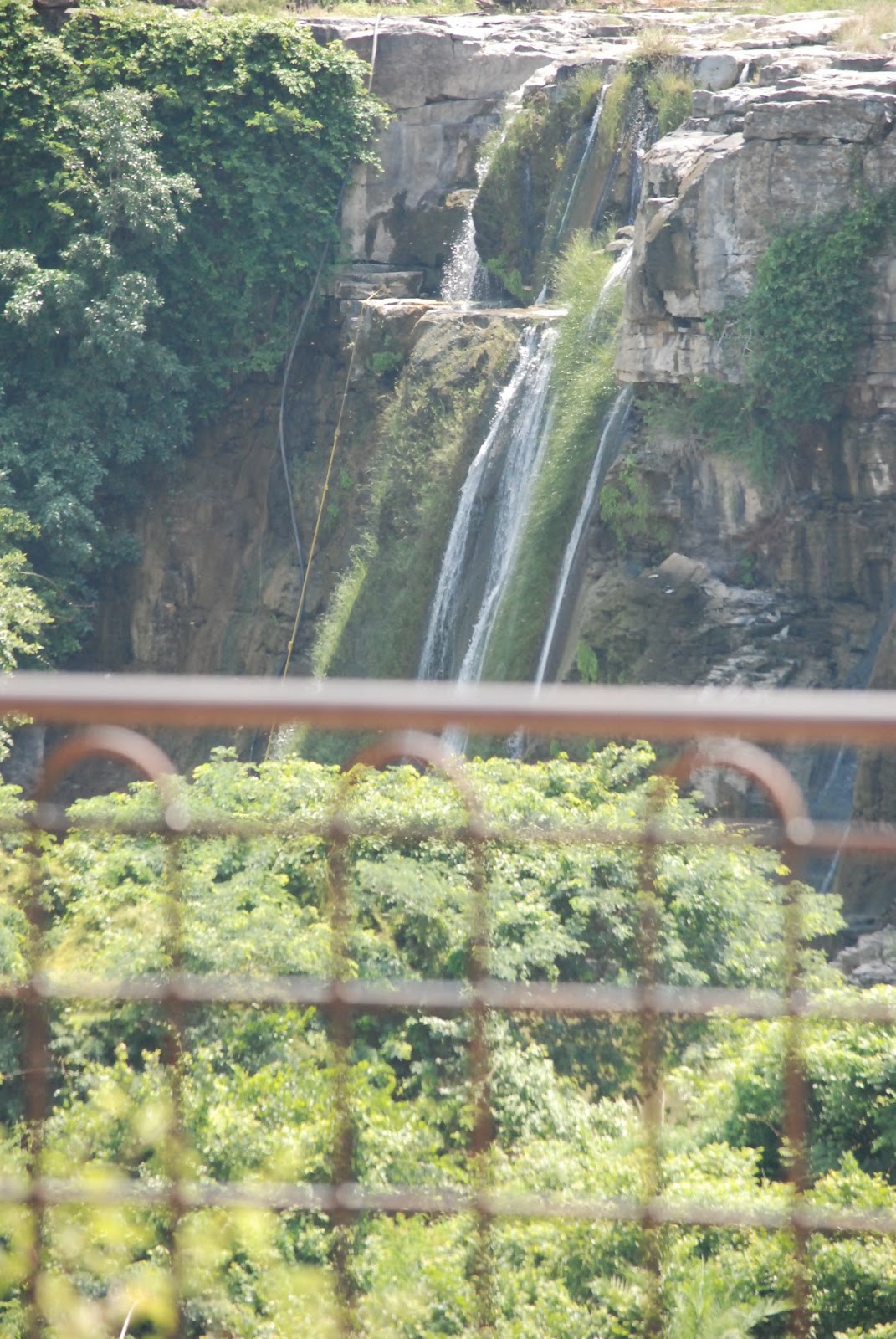
Ethipotala is a mountain stream cascading down the hills from a height of 21.3meters into a lagoon. This waterfalls is a combination of the 3 stream, namely Chandravanka Vagu, Nakkala Vagu and Tummalu Vagu. Beware of the lagoon in a hush green valley, formed by the waterfalls as it has a crocodile breeding centre. The stream joins the Krishna River after flowing for about another 3km. 


The place has an entrance fee (my apology for not being able to share the rates as I forgotten the small fee that I paid that day) which is properly manage by Andhra Pradesh tourism board. It is located about 11km down stream from Nagarjuna Sagar Dam.


Satisfied with what I saw and snapped, I then wished to record my visit with a photo of me by the waterfall. I turned to Phani, who would always followed behind, becoming my bodyguard beside a full time driver. I passed him my Nikon for him to snap the said intended photo. And, the result can be seen below. While passing the camera, I of course had taught him how to use it added with a gentle reminder that he must hold the camera tightly before the button is pushed.


Looking at my blur image but clear scenery, he tried focusing again few times but the result ended the same. Hence, we switched places so that he can see and copied exactly how I snapped his. After showing him the result, I again reminded him, "do not shake your hand Phani, be calm".


Well.. I must be amused to see the same result but I spotted the obvious difference with the 2 pictures.. it was the way I hold my smile.


We switched place again for the second time so that he will be more comfortable when practicing more. However, I can sense that he was beginning to panic and stressed out at this point.


On his 3rd attempt, the result was still the same. Okay, let's accept the fact that you can't shoot Phani whilst I peck his back to make him feel alright.


In a hot summer day, I sighed silently and took few moments of zooming the lenses avoiding my frustration and stress for not able to record a clear photo of me and the waterfalls. Phani stand beside in silent. He never talked much this boy. I like him a lot though. How I miss the silence between us. For the record, Phani is young enough to be my son. His mother passed away few years back and he lives with his father. When he told me the story of his life, I told him that I can actually be his mother. He smiled widely. Oh gosh, how I miss this boy so much.


Not giving up, I pleaded "please Phani, last shot... I know you can do it. Give me your best shot okay, a clear photo of me with the waterfall". With the same result, below, Phani profusely saying his apology. Never mind Phani, never mind... next time, perhaps, is what I responded. 


Frustrated with Phani's failure to be a Photographer, I proceeded to snap few more photos of the magnificent waterfalls before heading to Nagarjuna Saga dam.


The last photo of the visit, I captured a moment where Phani stand still waiting patiently for me to give him the next instruction by the beautiful view of Ethipotala waterfalls. Bliss.


Nagarjuna Sagar Dam

Tour date: 19th September 2012

It was a day trip to Nagarjuna Sagar Dam, by road since the dam is located only about 168km from where I was staying. 19th September 2012 was a public holiday. Only the 2 of us, phani and I were enjoying a 3 hours drive to the modern dam constructed in 1955 though the British Engineers has sketched it in 1905.


The weather was hot in September month (all over Andhra Pradesh state) and I'm fully aware that I shouldn't be complaining as I had a luxury of AC vehicles if to compare with others. We used a State Highway 2, which is a quite good rood to travel though some parts were under upgrading and improvement. A much better road when comparing a route to Karnataka from Guntur. 


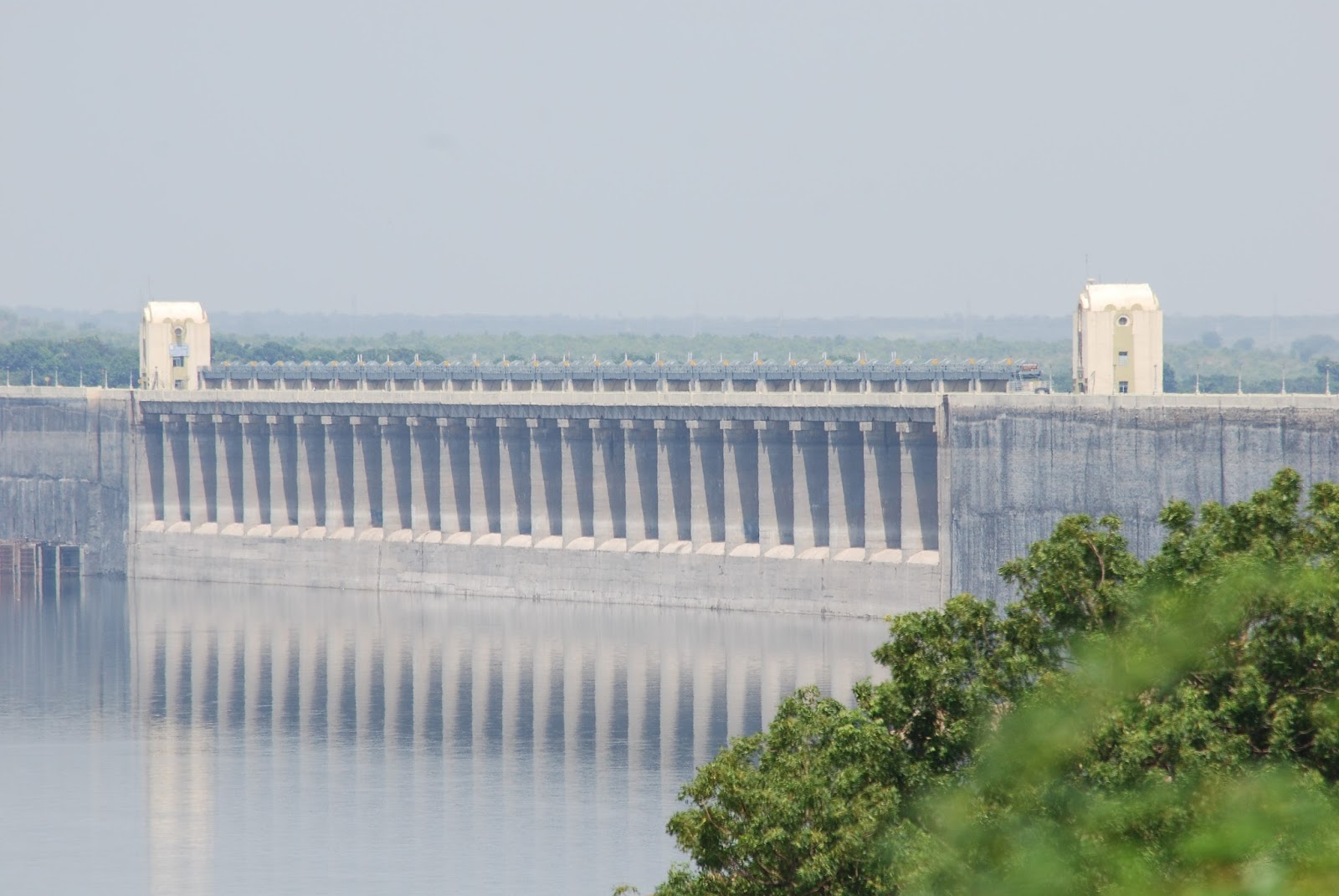
The dam was once the World's largest stone masonry dam during it's time, which is built across Krishna River at Nagarjuna Sagar near Nalgonda district and Guntur district in the state of Andhra Pradesh. It is 150m tall and 1.6km long with 26 gates. The project was among the earliest under India's largest infrastructure of the green revolution. It helps to irrigate the farming and generate a hydro power to the nearby districts. 


Nagarjuna Sagar Dam is the 3rd dam that I visited during my 21 months working/stay in India, 2011-2012. The first was a Bushi Dam in Maharashtra State located in Lonavla, visited on 18th September 2011 and second was Beas-Sutlej given a prosperity to Sundernagar, the biggest colony in Himachal Pradesh, visited on 18th December 2011.


Project construction kick-off was officially inaugurated by India first Prime Minister, Jawaharlal Nehru on 10 December 1955 and was proceeded for the next 12 years. The reservoir water was released into the left and right bank canals by Prime Minister Indira Gandhi in 1967. Construction of the hydro power plant followed, with generation increasing between 1978 and 1985, as additional units came into service.


The construction of the dam submerged an ancient Buddhist settlement, Nagarjunakonda, which was the capital of the Ikshvaku dynasty in the 1st and 2nd centuries, the successors of the Satavahnas in the Eastern Deccan. Excavations here had yielded 30 Buddhist monasteries, as well as art works and inscriptions of great historical importance. In advance of the reservoir's flooding, monuments were dug up and relocated. Some were moved to Nagarjuna's Hill, now an island in the middle of the reservoir. Others were moved to the mainland.


We drove further up to have a better view from the top of the dam and/or looking for a ferry for me to reach a Nagarjunakonda temple. Instead, we found a church monasteries was established long ago in that area. It was nice to see a rich religious culture happening in Nagonda district though it was use to be the biggest Buddhist monasteries.


Below photos were the last 2 that I snapped before we took a right turn heading back to Vijayawada and forgetting my initial plan of saying hello to Nagarjunakonda.